CodeTheFuture: Tech Labs for Underprivileged Youth
About this Campaign
The modern global economy is rapidly transforming into a digital-first ecosystem, yet millions of bright, ambitious youths in underserved neighborhoods remain entirely locked out of this progress. In low-income public schools, educational resources rarely extend beyond outdated textbooks and overcrowded chalk-and-board classrooms. Most students reach adulthood without ever touching a functioning computer or understanding how software shapes the services, tools, and platforms they see every day. This severe digital divide solidifies inequality, keeping capable minds confined to low-wage, informal labor markets.
Bridging this gap requires more than distributing a few second-hand computers that sit unused in a locked office. It requires a modern learning space, robust high-speed connectivity, continuous electricity, and an industry-relevant curriculum taught by active practitioners. When provided with the right tools, curious young students quickly move past basic typing and internet browsing, unlocking creative potential in coding, interface design, data analysis, and digital communications.
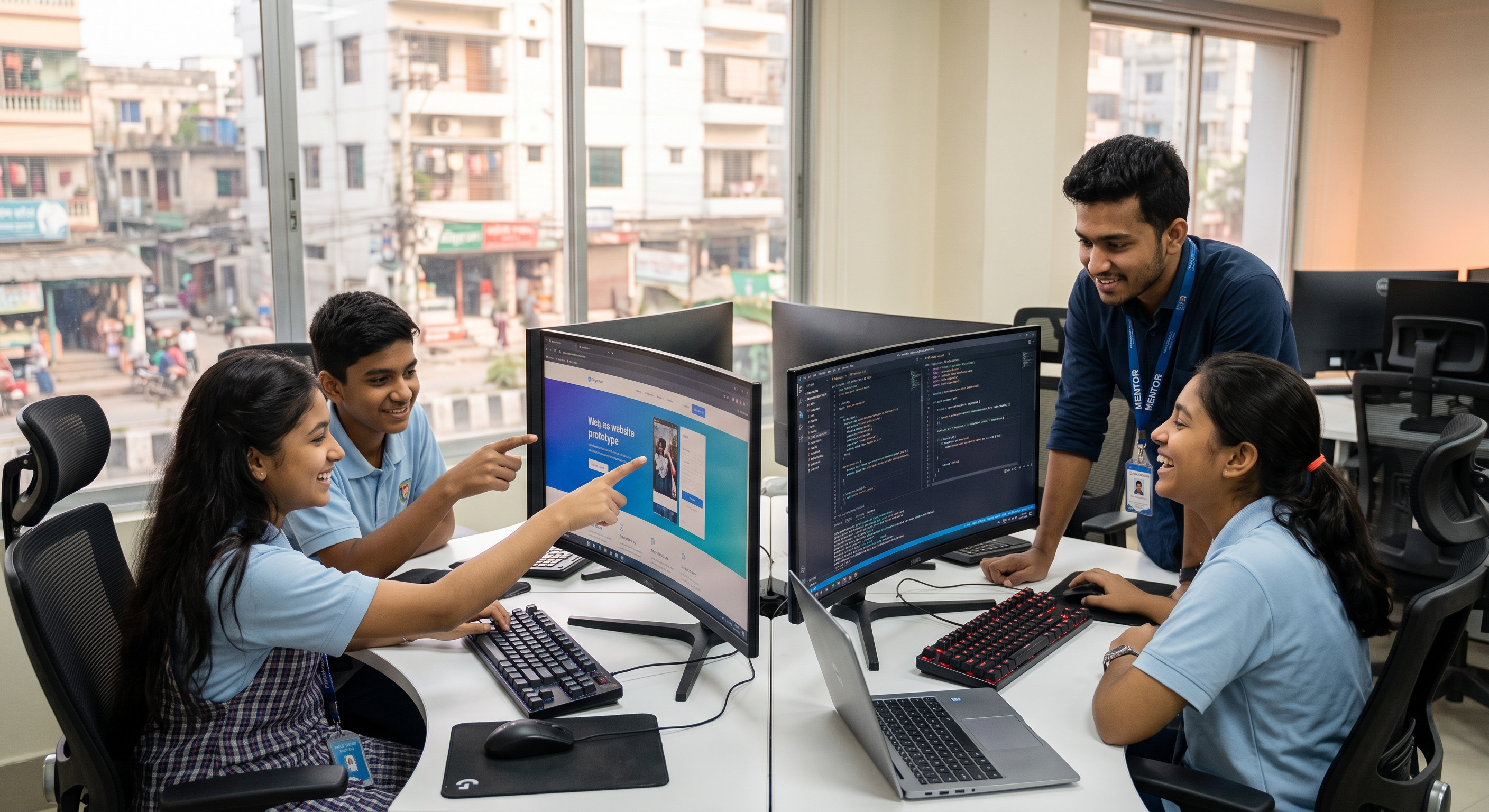
CodeTheFuture is establishing three fully equipped community technology centers located directly inside high-density, low-income urban districts. Each lab contains thirty commercial-grade workstations running modern operating systems, fast fiber-optic internet backed by battery storage, interactive display boards, and a curriculum focused on practical web technologies, including HTML, CSS, JavaScript, and algorithmic thinking. Instead of memorizing abstract theory, students work in teams to design real-world applications, such as neighborhood service directories, community tracking boards, and educational mini-games.
The initiative connects students with working software engineers, product designers, and digital marketers through a weekly structured mentorship program. These mentors review student code, run mock interviews, and share actionable guidance on freelancing, remote apprenticeships, and university scholarship applications. We also run dedicated weekend sessions for young women, actively countering gender underrepresentation in the technology sector from the ground up.
Funding supports the procurement of durable computer hardware, licensing costs, fiber broadband subscriptions, interactive learning tools, and stipends for local volunteer instructors. By backing this initiative, you do not just fund hardware; you grant ambitious young minds the skills, confidence, and network required to lift themselves and their communities into the modern digital workforce.